On Monday we had the first rehearsal for the London Charity Orchestras Autumn concert. We only had time to play through the Symphony, Tchaik 5. I am playing Bass Trombone (for some reason LCO seem to have loads of tuba players on thoer books but just me on Bass Bone, over the years I have been playing I can't get on tuba even when two are needed) but on this occason no complants at all. This was the piece that first inspired me to take up the trombone.
I must have been about 15 or 16 on a Croydon Youth Philharmonic Orchestra holiday course, at the time I was CYPO's principle tuba but beginning to be pressed hard by Nick Hacket a very talented musician and gifted tuba player. We had, I think 4 of us on tube including Nick and another very competent player, and something like 9 trombones. The trouble was all the trombones where tenors, with the best players on first, then second and only some basic near beginners on third. This symphony needs a proper confident bass trombone, I observed this to our tutor during a break on the first day, he promptly went out to his car, brought in a bass trombone and gave it to me, five days later I played it in the end of course concert. By the end of the next term I was CYPO's Bass Trombone, Nick was in his proper place as the principle tuba and the rest as they say is history.
The orchestral bass trombone is a wonderful sound, and there are many, many well written parts for the specialist to enjoy, but my first love is still the tuba!
Wednesday, 29 September 2010


Saturday, 25 September 2010
All Saints Concert Band
It has just been pointed out to me that I have refered to this band a number of times over the summer, and have not put a link to thier web site. Well thanks Pat! there is now a link on the right.
I recently played with All Saints down in Eastbourne and had a thourghly enjoyable time. there was a decent audience and an entertaining programme, also I was playing Tuba so was a lot more confortable, thanks guys.
I recently played with All Saints down in Eastbourne and had a thourghly enjoyable time. there was a decent audience and an entertaining programme, also I was playing Tuba so was a lot more confortable, thanks guys.
More Hever
I think I may have been a bit unfair on Hever's gardens, I should say that the grounds at Hever are splendid, well maintained, and well thought out.  It is a great place for a day out with plenty to maintain interest throughout the day. It is just that I think so much more could be made from the idea of a dahlia border.


It is a great place for a day out with plenty to maintain interest throughout the day. It is just that I think so much more could be made from the idea of a dahlia border.
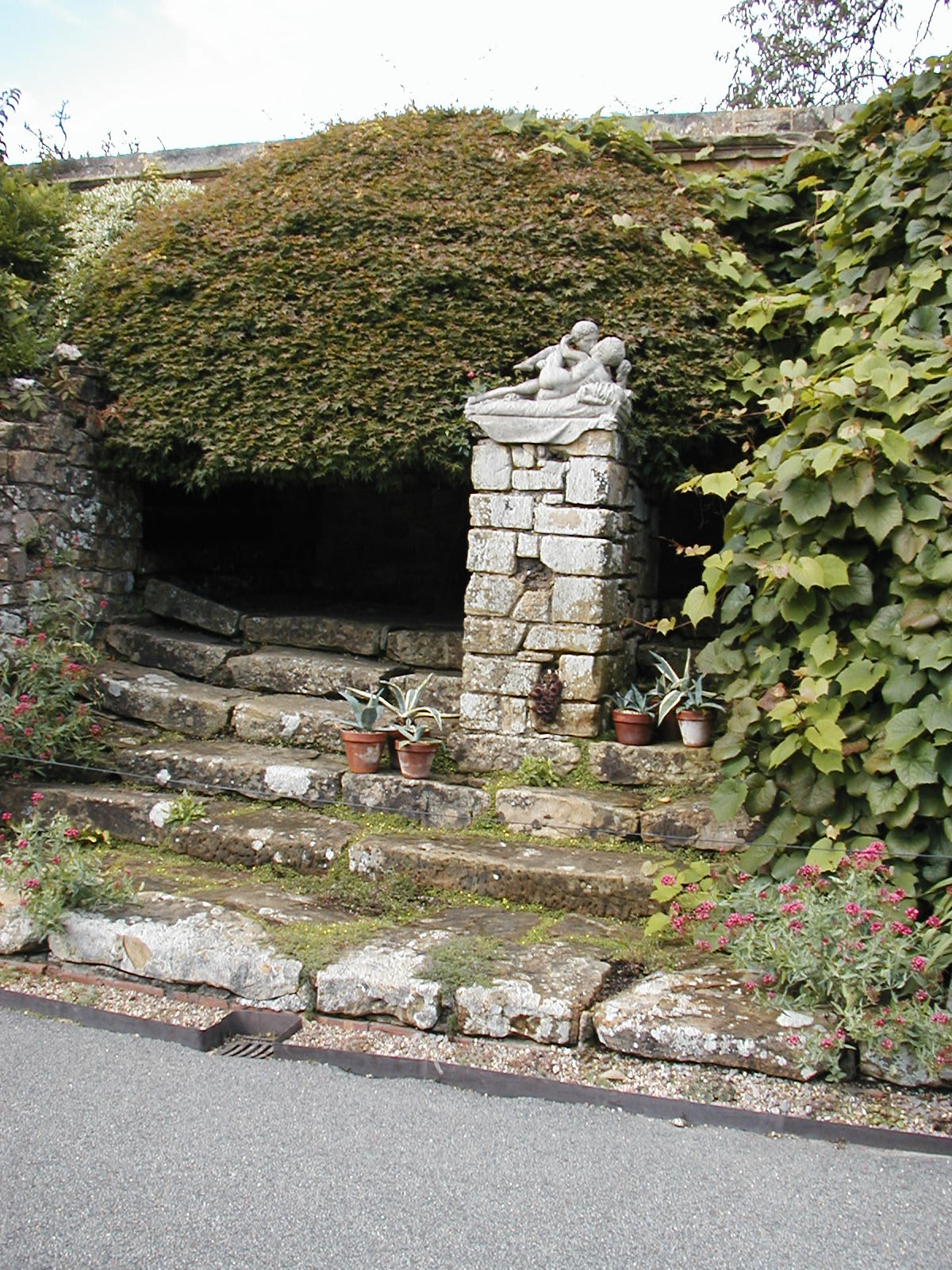
I have found my camera now (in the wife's car!) and can share my shots from that day , make up your own minds


Sunday, 19 September 2010
More stuff and nonsence
Sorry not to have posted much for quite a while now, truth to tell I've just been too busy with all sorts of things, so that by the time I've slowed down in the evening and actually have a bit of time I'm just too tired.
I have been playing and did go down to Hever Castle and enjoyed the day enormously, however I was rather disappointed with the Dahlia borders. This should have been a glory of colour and for, instead all the dahlias were of the same type and more or less the same height. Allowing for the profusion of types and colours available I think a lot more could be made of this idea, I just need a customer with enough space and money to let me try. I did take a few pictures, but after all my busyness now I can't find the camera.
I will try to post something more interesting and coherent when I am a little more settled.
Sunday, 12 September 2010
Why I hate John Fletcher
Well, maybe not quite true, John Fletcher was the finest Tuba player of his generation, and maybe since the instrument was invented. He didn't bequeath us some significant innovation in our machinery - like the Helleberg mouthpiece named after the principle tuba player in the Sousa band, neither did he innovate in how we learn to play and technique, like Arnold Jacobs. He just did it better than anyone else around. Follow this link, listen and see (or rather hear) what I mean, http://www.johnfletcher-tuba.co.uk/Resources/flight.html
So why do "I hate John Fletcher", well he did ruin the classic Boosey & Hawkes Imperial model EEb Tuba by introducing the big bell, but no it's not that, and on the occasions that he heard me play he was very complimentary and helpful, so it's not that. I always found him very friendly, helpful, and enthusiastic, he started and led the Tuba Christmas parties in London and was evangelistic about our instrument, so it's not that. No Fletch was the first Tuba virtuoso whose recordings became mainstream, non tuba players listened to what he did - and liked it. The trouble is they then expected us all to be able to the same., AND WE CAN'T http://www.youtube.com/watch?v=dK58EE5b4qc well I
There are many very fine players around now, the current generation have brought our instrument into the solo field and extended the repertoire, with players such as Walter Hilgers, Sam Piliafin, Jim Gourlay and so many others around we all have the opportunity to hear great soloists playing great solos - but Fletch was first.
Finally a quote from some old programme notes I found
Before John Fletcher the reputation of the tuba as a musical instrument was not altogether grand. It was considered almost entirely as a bass instrument for the brass section of bands and orchestras. Any use of the tuba in a solo capacity was normally in order to gain a laugh.
John Fletcher changed all that by treating the instrument as a vehicle for his remarkable musical talents and establishing that it was after all capable of expressive and technical virtuosity. It was, in his hands, capable of producing the whole gamut of musical expression. His special talent though was not so much what he could do technically but how to use his ability to master the instrument in the service of the music. He had no time for empty flamboyance but loved to provide just the right sound and style for whatever music he was playing.
As a teacher he hated pomposity and avoided the ‘master-class’ situation. He preferred to explore the instrument with his students, avoiding quick-fix answers in favour of discussion of the possibilities. He always managed to present his views with humour and gave the impression that he was gaining as much from the sessions as his students were.
Whenever possible he like to demonstrate through enjoyable performance.
It is still relatively unusual as a tuba player to get to play many "tunes", but certainly the parts I get to play - especially in contemporary wind band music - are so much more interesting than they were, in no small part thanks to Fletch
Saturday, 28 August 2010
Heroes
I noticed the other day that on my old "myspace" page there is a question about heroes, I listed mine as Joseph Paxton and Fran Cotton. I also commented that you won't often see those two names together - I think there might be a brownie point for anyone who already knows who they both are.
 Joseph Paxton was one of the great gardeners, his most famous accomplishment being the design of the Crystal Palace and the laying out of it's grounds, just up the road from where I live.

For those of you who don't know this particular part of South East London, the Crystal Palace is now both a major park and the sight of the National Sports Centre. There used to be a motor racing circuit there as well, but they built the stands for the running track over part of the circuit. Every time I went swimming we used to walk past this bust of Paxton. I'm not sure when this went up, but there is a lot of statuary around the park, including the famous Dinosaurs, it has to be said that this is not one of the best pieces on display.
Fran Cotton is a different proposition altogether I have lifted this article from Scrum.com "as an England and British and Irish Lions prop he was ahead of his time in levels of fitness and conditioning, he soon became a legend in the white of England and the red of the Lions. Cotton's international debut came against Scotland in March 1971 and while he was too late to arrive on the international scene to warrant inclusion on the Lions' 1971 tour of New Zealand, he made his mark three years later in South Africa.
Cotton played in all four Tests of the Lions' famous win in South Africa, forming a powerful scrimmaging unit alongside Bobby Windsor and Ian McLauchlan. Cotton, at over six feet tall, was seen by some as too tall for the front-row but he was complemented perfectly by the compact and powerful McLauchlan.

Cotton's versatility was another key string to his bow, with his four caps in 1974 coming on the tighthead side and three against New Zealand in 1977 on the loosehead. In 1977 Cotton was also the subject of one of the sport's most famous pictures, his mud smeared face being captured as a reminder of the terrible weather conditions against the Junior All Blacks.
Cotton's association with the Lions looked to have ended in 1980 when he left the tour early due to a bout of viral pericarditis, originally mis-diagnosed as a heart-attack, but in 1997 he served as the tourist's team manager as they won the series in South Africa.
Following his retirement from playing Cotton set up rugby leisure company Cotton Traders alongside fellow England international Steve Smith."
What this doesn't tell you is that both of these men started from relatively humble backgrounds and rose to the very top of both society and their chosen fields through their own hard work determination and talent. I have a copy of Fran Cotton's autobiography, but like so many sportsman's books it just tells of his playing career, and more or less finishes when he stooped playing. Given that he now heads a major multinational company, has managed a successful Lions' tour and is a leading RFU luminary I await a second volume! - are you reading this Fran?
There is of course a name missing - John Fletcher, if you don't know John Fletcher then you may be reading the wrong blog I will write more on Fletcher and heroes in general, now I need to sleep.
Tuesday, 24 August 2010
Bank Holiday Monday
Having only just commented that there was not much going on on the music front, I am now going to play at Hever Castle on Bank Holiday Monday with the All Saints Concert Band. I shall be on Bass Trombone so had better do a bit of practise before then.
I like Hever gardens, they are a good selection of parkland and garden with some nice statuary and a great lake, there is also a dahlia border which should look good in late August, I shall try to remember my camera and get you a few shots.
I like Hever gardens, they are a good selection of parkland and garden with some nice statuary and a great lake, there is also a dahlia border which should look good in late August, I shall try to remember my camera and get you a few shots.
Subscribe to:
Posts (Atom)